


Beskrivning
Beskrivning
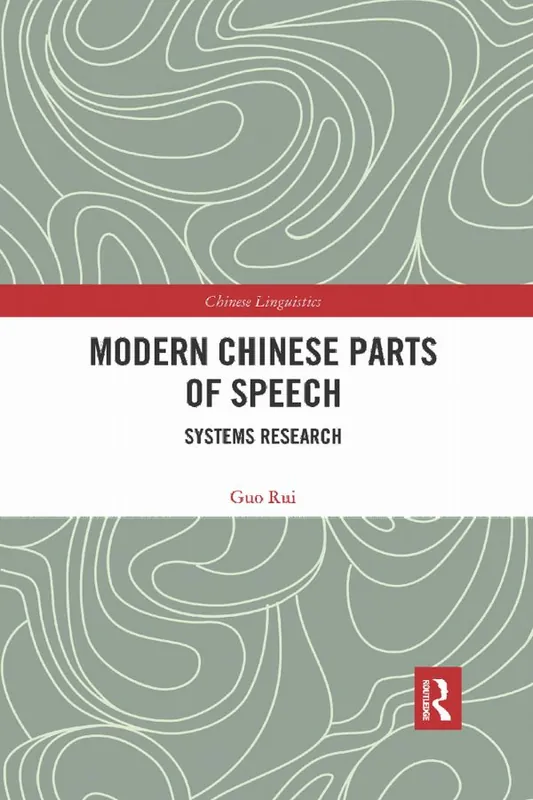
What is theessence of a part of speech? Why is it difficult toclassify parts of speech? What are the bases and criteria forclassifying them? How should they be classified? In doing so, how should a conversional word be dealt with? How should nomonalization be treated? These are just some of the questions answered in this book. Theclassification of parts of speech in Chinese is a tough job due tothe language’slack of morphological differences. Based on the analysis of nearly 40,000 Chinese characters, this bookproposes that, essentially, a part of speech is not of distributional type and that its intrinsic basis is anexpressional function and the semantic type. Essentially, large categories such as substantive words, predicate words and modification words are classes of wordsclassified according to their expressional functions. Basic categories such as nouns, verbs and adjectives are classes that combine semantic types with syntactical functions. Inclassifying parts of speech, the book pays attention not to identifying a single distributive characteristic that is internally universal and externally exclusive but to clustering the grammatical functions that have the same classificationvalue through the “reflection-representation” relationship among distribution, expressional function and semantic type (distribution reflects expressional function and semantic type, which are, in turn,represented as distribution), thereby identifying the classificationcriteria. It uses distributional compatibility and the correlation principle to analyze which distributional differences represent differences in parts of speech and which do not. In this way, grammatical functions that have equalclassification values are collected into one equivalent function cluster, each of which represents one part of speech.The book uses four strategies toclassify parts of speech, namely the homogeneity strategy, the homomorphical strategy, the priority homomorphical strategy and theconsolidation strategy. It willbe a valuable reference for Chinese linguistic researchers and students as well as Chinese learners.